The Wait: Peace that Protects

What is peace like?
Perhaps peace…
…looks like green pastures and still waters.
…feels like breeze and sun that caresses just right.
…sounds like…

Alas, the Valley of the Shadow of Death is inevitable.  
When Chaos and Conflict arrive, where can Peace be found? 
Philippians 4:7 speaks of Peace that transcends all understanding, guarding our hearts and minds in Christ Jesus.
This Peace of God is not merely serene. This Peace protects.
It doesn’t always protect us from circumstances and hard times.  Life still be lifing. 
Yet in my sanctified imagination, I see Peace on guard within my soul.  

Here are some thoughts on practicing the presence of Peace during Advent.

Your Call: How does Peace speak to you in this season?  How can you practice its presence?

The Wait: Wrestling with the Essence of Time

I can appear calm, yet I know that I can be impatient.   I’m the one that scouts out what looks like the shorter line in the store, only to be dismayed when another line moves faster.  That kind of wait can be a minor annoyance, but some waits are longer than others. Some waits erode hope.  Some waits shed tears.   

I haven’t worn a watch in a while.  Yet my mindset is often attached to a clock ticking in my head. Chronological time is a tool that helps us to function and organize our days.  Yet our eternal God reserves the right to transcend it. If you have experienced some frustration with waiting, I wonder what comes to mind for you when you watch this video. Sit with it for a few minutes.

If you would like to see more about how the above video relates to the Advent season, watch this Invitation to Hope.

Your Call: Reflect on two Greek words for time, which are 1) chronos, which speaks to chronological time, and 2)  kairos, which speaks to an appointed time or a due season.  How can this understanding prepare you for your wrestling match with time?

Press On: Navigating the Buttons of Life


Right now, which of these buttons speaks to you the most? Are you inclined to press previous, play, pause, stop, or next?

I tend to hover over the “next” button.  The temptation there for me is ruminating about what’s next to the point where I forget to be present, which can lead to escapism or fear.  I am realizing that I can reframe that “next” button as I trust God with my future. I can press “previous” and express gratitude for how God has been faithful in the past. I can press “pause” and take a deep breath, reminding myself that the Holy Spirit in within and around me. I can cultivate a sense of expectancy while not imposing my expectations or obsessing over exact outcomes. I can sing along with the hymnwriter who proclaims, “Strength for today and bright hope for tomorrow.”

Your Call: Reflect on the button that stands out the most and how that speaks to this season of your life.  (Sisters in Christ, I invite you to subscribe to my Flow to Fruitful newsletter and receive a free mini-workbook that goes a little deeper with this. For more information, click: bit.ly/flowtofruitful).

Those Days, part 2


The swing welcomed me.
It had been so long since I pumped my legs, 
Letting momentum take me higher,
Caressed by breeze and sky,
Lifted, grounded and held at the same time.

With each swing, 
I saw Freedom lift her hands.

Your Call: Swings were my favorite part of the playground. 
Is there a memory of a past delight that can re-energize you now?

Resurrection Living: Prayers from the Edge

Imagine sitting around a table with the biblical prophets Elijah and Habakkuk, along with Ida B. Wells, and Rev. Dr. Martin Luther King, Jr. What would you ask them? One of my questions would be, “How do you handle discouragement?” I don’t know exactly what they would have said, but I believe that some version of a “prayer closet” would be mentioned in every response.  

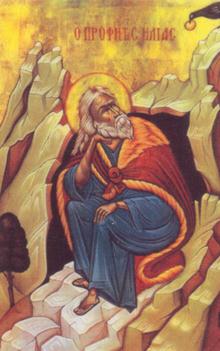
Elijah is running for his life. Exhausted, he ends up scrunched down under a broom tree in the wilderness, desperate to disappear. In his torment, he manages to consume the food and drink offered, and makes his way to the mountain of God.  He ends up in a cave, but it’s still in the mountain of God, a place where he repeatedly reminds God of his faithfulness to his prophetic call. In essence, he is saying to God, “It wasn’t supposed to happen like this…”

The angel of the Lord came back a second time and touched him and said, “Get up and eat, for the journey is too much for you.” So he got up and ate and drank. Strengthened by that food, he traveled forty days and forty nights until he reached Horeb, the mountain of God.  There he went into a cave and spent the night. And the word of the Lord came to him: “What are you doing here, Elijah?”  He replied, “I have been very zealous for the Lord God Almighty. The Israelites have rejected your covenant, torn down your altars, and put your prophets to death with the sword. I am the only one left, and now they are trying to kill me too.”
1 Kings 19:7-10

Habakkuk is clear that he has a complaint. He sees the violence around him. He doesn’t get to view the mayhem from a distant place but is up close as he bears witness to the idolatry and injustice surrounding him and cries out to God,  “Why are you doing nothing about this?” Yet, the prophet’s plan is to go to his post and wait for God’s answer.

“I will stand at my watchpost, and station myself on the rampart; I will keep watch to see what he will say to me, and what he will answer concerning my complaint.” Habakkuk 2:1

Ida B. Wells rides a train from Memphis for a teaching assignment. The conductor insists that she move from the “ladies car” to the “smoking car.” True to form, she refuses to move and the conductor resorts to forcibly removing her.  Upon returning to Memphis, she files a lawsuit against the railroad and wins the case. Unfortunately, the decision is reversed by the state’s Supreme Court. An entry in her diary, dated April 11, 1887, expresses her disappointment.

“O God, is there no redress, no peace, no justice in this land for us? Thou hast always fought the battles of the weak & oppressed. Come to my aid at this moment & teach me what to do, for I am sorely, bitterly disappointed. Show us the way, even as Thou led the children of Israel out of bondage into the promised land.”  From The Memphis Diary of Ida B. Wells, edited by Miriam Decosta-Willis 

Dr. Martin Luther King Jr. receives yet another menacing phone call at his home.  The caller spews racist hatred and threatens to hurt his family. He becomes so overwhelmed that he can’t sleep, so he gets up, goes to the kitchen and makes some coffee. Then he prays:

“Lord, I’m down here trying to do what’s right. I think I’m right; I think the cause that we represent is right.  But Lord, I must confess that I’m weak now; I’m faltering; I’m losing my courage. And I can’t let the people see me like this because if they see me weak and losing my courage, they will begin to get weak.”   Martin Luther King Jr from his sermon, “Why Jesus Called a Man a Fool”,  August 27, 1967

Sometimes, we must steal away to a secret place.  At that place, we encounter the divine presence and power we need for resurrection of courage and commitment.

Elijah hid in the mountain. God told him about the 7000 reinforcements he knew not of, and sent him to his next assignment

Habakkuk waited at his watchpost. God told him to write the vision of justice that would come and wait for it.

Ida. B. Wells wrote in her diary.  God must have answered since she went on to expose the wickedness of lynching in America

Dr. King sat at his coffee table. God told him: Martin Luther, stand up for righteousness, stand up for justice, stand up for truth.  And lo I will be with you, even until the end of the world.”

How do we press on in the midst of our frustrations and fears?  In the same sermon I referred to earlier, Dr. King stated that our enslaved ancestors took another prophet’s “question mark and straightened it into an exclamation point.” How? They clung to the courage that oppressive forces tried to snatch.  How? They continued to remind themselves of one ultimate truth passed down from generation to generation:
God is with us.  

Your Call: Do you have a special place of prayer where you meet God in times of turmoil?  Where is your watchpost?

Resurrection Living: Seasons and Stumps

It was the first Sunday in November. While some were loving the extra hour of sleep, I was mourning the loss of daylight savings time. There was something about the sun going down earlier that felt unsettling but I’m trying to lean into it a little bit to see what I can learn. The darkness is not bad in of itself. It signals our bodies that it is time to sleep and get some rest. Hidden processes that help us and all of God’s creation to rejuvenate and grow take place in the dark.  Just because there is no illumination doesn’t mean nothing is happening. I see Winter as a theater that grows dark with an anticipation of what will happen when the curtain opens and the lights on stage come on. 

Spring and Summer are my preferred seasons, but lately Autumn and Winter have the most to teach me.  Every fall, I am struck by the falling of the leaves from trees. I had already considered the fact that a loss could make room for something new.  However, I recently learned that these trees don’t lose their leaves; they actually release them to preserve resources for the winter.  When Spring shows up, the branches welcome new leaves. This is a form of resurrection which reminds us that what appears to be dead can show signs of life.

But what if something more drastic happens? What if a tree is cut down?  It’s one thing when leaves fall from a tree; it’s another thing when the whole tree falls.  At a time when the destiny of God’s people seemed to be cut off, the prophet Isaiah offered hope.  The prophecy about the resurrection of that destiny pointed to a stump — a cut-down tree left for dead.  

A shoot shall come out from the stump of Jesse,  and a branch shall grow out of his roots. Isaiah 11:1

Is there a stump in the forest of your life? That stump could represent your joy, your faith, or your peace.  It might point to your health or your finances. Maybe it speaks to the state of your family or community. It would have been easier if nothing remained, but alas the stump reminds you of what has been cut off. You try to forget about it and distract yourself but then, you trip over it.  It could be that the stump is your stumbling block to giving up on your destiny. Despite how it appears, a stump can produce growth because the roots are still working underground.

It may seem weird to reflect on resurrection at this time of year, yet I see Advent as a season for sitting with the stumps of life. As we wait for the shoot and the branch to emerge, we  can trust that what looks lifeless on the surface still grows under the surface.  As hidden and mysterious as this process is, we can anticipate and rejoice in the manifestation that will come.

On that day the root of Jesse shall stand as a signal to the peoples; the nations shall inquire of him, and his dwelling shall be glorious. Isaiah 11:10

Your Call:  Is there an area of your life that feels like a stump? Is it possible that God is doing something in that area that you can’t see right now? 

Resurrection Living: The Cloud of Witnesses

August typically puts me in a celebratory and contemplative mood as it is my birth month, a time of gratitude and reflection.  This time it felt different as I was troubled with all that is going on in the country — gun violence, hate crimes and an undercurrent of despair. It seems that death is shaking its fist at hope, trying to claim territory in communities and creep its way into the hearts and minds of people who are simply trying to live.  

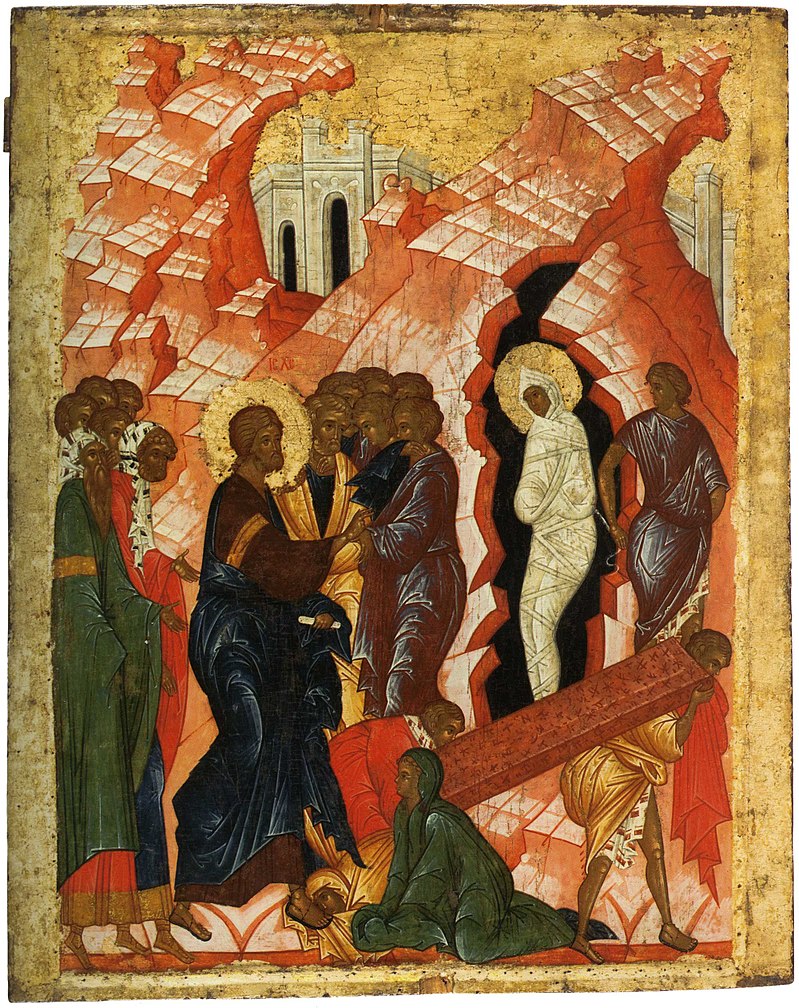
Mary paces the floor,  muttering…
“He’ll be here. He’s coming. Surely Jesus got our message that our brother needs him!”
Outside there are whispers, “Who will tell her?”
And then a sigh, “I will tell her.”
Martha enters, trying to find the words with only a tear revealing the news,
“Lazarus is dead.”
Mary opens her mouth and collapses in a heap.
Her gasp gains momentum in her throat and the wail comes…
Days later, the whispers start again  — “
He shows up now?!”
Mary emerges, crying out, “If You had been here…”
And Jesus weeps…

Last month, I woke up on a Sunday morning to a local radio station paying tribute to the late Queen of Soul, Aretha Franklin. The song that was playing transported me to the Bronx apartment of my childhood.   I was young but old enough to be home alone. A mahogany hutch stood in a corner of the living room. Sitting on one of the shelves was a friend inviting me over to visit. I opened the cabinet beneath and saw them all, knowing which one I wanted to hear — that “Amazing Grace” album. I pulled it out and saw the regal woman poised and sitting on some steps with her burgundy dashiki dress and head wrap. I lifted the hand of my friend and carefully placed it on the spinning black disc with the red, white and green label in the center.  

Oh oh Mary, Oh oh Mary, Oh oh Mary, Oh oh Mary
Oh Mary Don’t You Weep
Oh Martha don’t you moan
Oh Mary Don’t You Weep
Oh Martha don’t you moan
Pharaoh’s Army
Drowned in the Red Sea
Oh Mary Don’t You Weep. Don’t weep.
Tell Martha not to moan.

I had this song on repeat.  I didn’t know why it appealed to me so much, but in retrospect there was something otherworldly happening when they told the story:

If I could
I surely would
stand on the rock
where Moses stood
Pharaoh’s Army
Drowned in the Red Sea
Oh Mary Don’t You Weep. Don’t weep.
Tell Martha not to moan

In my sanctified imagination, I can hear a choir singing this to Mary, who wonders what Pharaoh’s Army has to do with her situation. Then out of nowhere,  Miriam, Moses and Aaron show up to testify.  In those moments when I’m wondering where in the world Jesus is, I need to pause to listen to the testimony of Aretha and all the ancestors who sang or lived out this song.

Hebrews 11 and 12 speak of a “cloud of witnesses” who testify to Divine Presence and Power that showed up for them on the journey that is life. Sometimes we need a reminder of past triumphs over oppressive forces, including death in its many forms. Every once in a while, a witness steps forward and taps us on the shoulder to let us know that we will finish the race with victory. In spite of what it looks like, death dies and ultimately, resurrection reigns.


Your Call:
Who in your cloud of witnesses is encouraging you in the midst of your race, especially during challenging times?

Resurrection Living: The Power of the Squad

I met a couple of sister-friends for breakfast a few weeks ago. As we caught up with what was happening in each other’s lives, I noticed that we had similar challenges and had been nudged by Divine Destiny in various ways.  I left the gathering encouraged and yet reminded that my comfort zone, however cozy, can’t be my resting place. This experience was not particularly dramatic but it became more meaningful in light of what has taken place in recent weeks.

I thought about the four congresswoman of color (Representatives Alexandria Ocasio-Cortez, Ilhan Omar, Ayanna Pressley and Rashida Tlaib) who were targeted with racist insults for insisting on being seen and heard.  

The 50th anniversary of the U.S. moon landing made me ponder the legacy of the three African American women (Katherine Johnson, Mary Jackson, and Dorothy Vaughan) featured in the movie Hidden Figures, all of whom paved the way for that to take place in the midst of a segregated workplace.

Consider the courage necessary for these women to persevere. Can you imagine the conversations that they needed to have to keep each other from giving up? This is the power of the squad.   Your squad encourages you when you are tempted to shrink back. Your squad challenges you when you settle for less than your best. Your squad backs you up when you are under fire. Your squad celebrates with you in your victories.

Let’s go back even further and  picture a group of women standing and weeping before a cross on which their beloved Jesus Christ hung and died. 

Near the cross of Jesus stood his mother, his mother’s sister, Mary the wife of Clopas, and Mary Magdalene.  John 19:25

Can you hear them asking themselves or perhaps one another, “What are we going to do now?” They would gather once again to head to the tomb only to find it empty.

The angel said to the women, “Do not be afraid, for I know that you are looking for Jesus, who was crucified.  He is not here; he has risen, just as he said. Come and see the place where he lay. Then go quickly and tell his disciples: ‘He has risen from the dead and is going ahead of you into Galilee. There you will see him.’ Now I have told you.”  So the women hurried away from the tomb, afraid yet filled with joy, and ran to tell his disciples.  Matthew 28:5-8

This squad bore witness to the resurrection and yet it is reported that some of the disciples did not believe them (Luke 24:9-11).  Nevertheless, the women could not sit by the empty tomb stuck in the stigma of being disbelieved. When you are not taken seriously in proclaiming and walking in newness of life, it is good to have a squad.

Now like never before, there needs to be a resurrection of hope. Sometimes hope withers in disappointment with personal situations and unmet expectations. Sometimes hope is buried under disillusionment with society and its institutions. What can breathe life into a hope that has been declared dead?  Sometimes that Resuscitating Wind is channeled through a squad to remind you to be fully alive.

Your Call:  How has God used a squad to speak new life over you in some way? How can you speak new life into others around you?   

Resurrection Living: The Power of Legacy


More than a month has passed since Easter 2019, and Jesus still lives.  I want and need to live out this truth. My desire going forward is to experience resurrection as a state of mind and a way of life.

In the meantime, Mother’s Day has come and gone and it was complicated for all kinds of reasons. Children have grieved the loss of their mothers.  Mothers grieve over loss of children. Others grieve over less than ideal relationships with their mothers or children. As thankful as I am for the woman who birthed and raised me,  I am also accepting (and grieving) the fact that I will not birth a child. And yes, having any role in mothering another is wonderful, but the disappointment is still real.

Is it possible to breathe new life into a dream that has died?

When I think about loved ones who have died, I find some comfort from the legacy they left.  For me, legacy is like the act of weaving the most meaningful threads of someone else’s life into the tapestry of my own life. As I process my own ambivalence around motherhood, I am reflecting on Shiphrah and Puah, Hebrew midwives in the Old Testament book of Exodus and I’m encouraged that God had something special in store for them.

God was pleased with the midwives. The people continued to increase in number—a very strong people. And because the midwives honored God, God gave them families of their own. Exodus 1:20-21 (The Message)

That is not to say that Shiphrah and Puah necessarily had biological children, but they would indeed bring something forth.  This is their legacy to me.

In  Exodus Women, Volume One: Securing the Sacred, Alison Gise Johnson and Vanessa Monroe make this clarion call:

“Midwives have no purpose unless women are ready to give birth — to birth dreams, strategic plans, businesses, careers, research, publications, and ministries. At some point, even midwives themselves are ready to birth. And so are you.”

As a spiritual midwife, I have rejoiced in bearing witness to the birthing of purpose in others. Yet I also want to delight in that Voice saying, “And there is more for you too…”
How about you? What are you being called to bring forth?

Your Call: Where are you bearing witness to new life in this season?  Whose legacy can you reflect on to encourage you?

Advent 3: Dreaming While Woke

When the Lord restored the fortunes of Zion, we were like those who dream.
Then our mouth was filled with laughter,  and our tongue with shouts of joy;
then it was said among the nations, “The Lord has done great things for them.”
The Lord has done great things for us, and we rejoiced.
Restore our fortunes, O Lord, like the watercourses in the Negeb.
May those who sow in tears reap with shouts of joy.
Those who go out weeping, bearing the seed for sowing,
shall come home with shouts of joy, carrying their sheaves.

Psalm 126 reminds me why worship is so important. In these nightmarish times, we can’t afford to stop dreaming of the goodness that is possible. Worship helps get us there by redirecting our focus toward God, not for escapism, but for the joy and power that comes with a stronger connection to God.

As we stay woke to the reality that is life today, hope must be one of our companions if we are to stay well. Worship gives us space to remember who God is and what God has already done so that we dare to envision a world where love, peace and justice reign.

In painting a picture of an empty riverbed in the desert region of the Negev, this psalm lifts up prayers for reversal and restoration, from dryness to drenching, from sowing in tears to reaping with joy.  Can you relate to this shift in your own life?

Worshipping in community gives us an opportunity to rejoice in anticipation of better times as we ask each other, “Can’t you feel a brand new day?!”  The song that poses this question is from the soundtrack of The Wiz.  It is not a traditional worship song but it speaks to our need to celebrate freedom at its fullest because “it’s like a different way of living now…”

Amazing things can happen when worship links up with work by way of the Spirit of God.  Isaiah 61 speaks of One anointed to be a vessel of reversal, bringing good news to the oppressed, binding up the brokenhearted, and proclaiming liberty to the captives.  It speaks of a people who have been planted by God for a ministry of restoration, building up and repairing the ruins around them. Will you accept God’s invitation to participate in the divine restoration to come?

Your Call: Watch the videos above; what calls out to you in them?  If you painted a picture of a “different way of living” for the world to see, what would it look like and what small step can you take to move in that direction?   What are you being anointed to do in God’s process of restoration?