Resurrection Living: Prayers from the Edge

Imagine sitting around a table with the biblical prophets Elijah and Habakkuk, along with Ida B. Wells, and Rev. Dr. Martin Luther King, Jr. What would you ask them? One of my questions would be, “How do you handle discouragement?” I don’t know exactly what they would have said, but I believe that some version of a “prayer closet” would be mentioned in every response.  

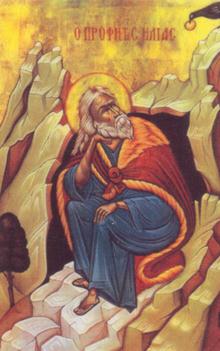
Elijah is running for his life. Exhausted, he ends up scrunched down under a broom tree in the wilderness, desperate to disappear. In his torment, he manages to consume the food and drink offered, and makes his way to the mountain of God.  He ends up in a cave, but it’s still in the mountain of God, a place where he repeatedly reminds God of his faithfulness to his prophetic call. In essence, he is saying to God, “It wasn’t supposed to happen like this…”

The angel of the Lord came back a second time and touched him and said, “Get up and eat, for the journey is too much for you.” So he got up and ate and drank. Strengthened by that food, he traveled forty days and forty nights until he reached Horeb, the mountain of God.  There he went into a cave and spent the night. And the word of the Lord came to him: “What are you doing here, Elijah?”  He replied, “I have been very zealous for the Lord God Almighty. The Israelites have rejected your covenant, torn down your altars, and put your prophets to death with the sword. I am the only one left, and now they are trying to kill me too.”
1 Kings 19:7-10

Habakkuk is clear that he has a complaint. He sees the violence around him. He doesn’t get to view the mayhem from a distant place but is up close as he bears witness to the idolatry and injustice surrounding him and cries out to God,  “Why are you doing nothing about this?” Yet, the prophet’s plan is to go to his post and wait for God’s answer.

“I will stand at my watchpost, and station myself on the rampart; I will keep watch to see what he will say to me, and what he will answer concerning my complaint.” Habakkuk 2:1

Ida B. Wells rides a train from Memphis for a teaching assignment. The conductor insists that she move from the “ladies car” to the “smoking car.” True to form, she refuses to move and the conductor resorts to forcibly removing her.  Upon returning to Memphis, she files a lawsuit against the railroad and wins the case. Unfortunately, the decision is reversed by the state’s Supreme Court. An entry in her diary, dated April 11, 1887, expresses her disappointment.

“O God, is there no redress, no peace, no justice in this land for us? Thou hast always fought the battles of the weak & oppressed. Come to my aid at this moment & teach me what to do, for I am sorely, bitterly disappointed. Show us the way, even as Thou led the children of Israel out of bondage into the promised land.”  From The Memphis Diary of Ida B. Wells, edited by Miriam Decosta-Willis 

Dr. Martin Luther King Jr. receives yet another menacing phone call at his home.  The caller spews racist hatred and threatens to hurt his family. He becomes so overwhelmed that he can’t sleep, so he gets up, goes to the kitchen and makes some coffee. Then he prays:

“Lord, I’m down here trying to do what’s right. I think I’m right; I think the cause that we represent is right.  But Lord, I must confess that I’m weak now; I’m faltering; I’m losing my courage. And I can’t let the people see me like this because if they see me weak and losing my courage, they will begin to get weak.”   Martin Luther King Jr from his sermon, “Why Jesus Called a Man a Fool”,  August 27, 1967

Sometimes, we must steal away to a secret place.  At that place, we encounter the divine presence and power we need for resurrection of courage and commitment.

Elijah hid in the mountain. God told him about the 7000 reinforcements he knew not of, and sent him to his next assignment

Habakkuk waited at his watchpost. God told him to write the vision of justice that would come and wait for it.

Ida. B. Wells wrote in her diary.  God must have answered since she went on to expose the wickedness of lynching in America

Dr. King sat at his coffee table. God told him: Martin Luther, stand up for righteousness, stand up for justice, stand up for truth.  And lo I will be with you, even until the end of the world.”

How do we press on in the midst of our frustrations and fears?  In the same sermon I referred to earlier, Dr. King stated that our enslaved ancestors took another prophet’s “question mark and straightened it into an exclamation point.” How? They clung to the courage that oppressive forces tried to snatch.  How? They continued to remind themselves of one ultimate truth passed down from generation to generation:
God is with us.  

Your Call: Do you have a special place of prayer where you meet God in times of turmoil?  Where is your watchpost?

Fierce and Fearless

Gabrielle Union received the Fierce and Fearless Award from Essence Magazine some time last year.  I have never had what would conventionally be thought of as a “fierce and fearless” persona, but over the course of my years in ministry, I’ve often been tempted to put one on.   I’ve also been guilty of dimming my own natural God-given shine, but now I’m on the road to recovering it. And that’s why Gabrielle’s acceptance speech resonates with me.  She held strength and vulnerability together while confessing her flaws and struggles. She affirmed the community of family and friends that have accompanied her on the journey.  There is something fierce about facing fear.

Jesus has named his followers after himself – the light of the world.  No longer is it acceptable to live in a dimmed existence that tries to disappear or an artificial fluorescence that seeks to outshine  — both are rooted in hiding under a basket. The Gospel is beautiful in that it allows the radiance of Christ to shine through the uniqueness and unity of a fierce and fearless people who have received God’s grace.

“You are the light of the world. A city built on a hill cannot be hid. No one after lighting a lamp puts it under the bushel basket, but on the lampstand, and it gives light to all in the house.  In the same way, let your light shine before others, so that they may see your good works and give glory to your Father in heaven.”   Matthew 5:14-16 (NRSV)

Your Call: Watch and reflect on the video.  What would it look like for you to become fierce and fearless?

Legacy, Part 2

CC Image courtesy of Lane 4 Imaging on Flickr

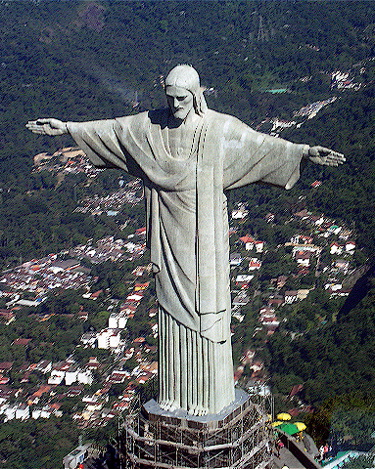
As I look at pictures from the recent MLK memorial dedication, the 30 foot tall statue of Rev. Dr. Martin Luther King, Jr. seems larger than life.  So it is with the notion of legacy, especially when you consider all that Dr. King accomplished before the age of 40.

Reflecting upon the lives of those who have made a notably “visible” impact in the world can be inspiring and overwhelming at the same time.  Now that I’m forty-something, my perspective on legacy is being tested and is surely evolving in this season of my life. Anyone in any kind of leadership role knows the temptation to measure legacy by visibility.

Truth be told, Dr. King’s legacy was strengthened by many who were relatively less visible:  Rosa Parks, Rev. Fred Shuttlesworth, Fannie Lou Hamer, and Ella Baker, to name a few. And even less visible:  21 teachers (my mother included) in Elloree, SC, who resigned rather than renounce their NAACP memberships.

Perhaps legacy begins when we act on opportunities to plant seeds of eternity along the way, wherever our journeys take us.  A few months ago, I posted a blog in tribute to my father that spoke of his legacy in a metaphorical way.  To be more concrete, I can say that my father modeled a willingness to question, intellectual curiosity, awareness of what’s going on in the world, not being caught up in popularity or pretension, and love of family and friends.  Not that I’ve mastered these values by any means, but they serve as a compass for me nevertheless.

CC Image courtesy of VoiceBrazil on Flickr

As I’ve studied and taught on Luke’s account of the Gospel for the past few weeks, I am struck by Jesus’ willingness to become human in such an unassuming way.  He could have simply showed up grown and regal, but chose another path, immersing Himself into the vulnerability of the human experience. Jesus did not shrink back from moving in visible ways or acknowledging His identity, but He did so on His own terms, leaving a legacy of love, redemption and empowerment for us to follow.  While this legacy is also larger than life, it also transcends our limitations and shows us where to start: Love the Lord your God with all your heart and with all your soul and with all your mind.  Love your neighbor as yourself. Act justly. Love mercy. Walk humbly with your God.

Your Call: If someone were commissioned to sculpt an image that represented you, what would you want it to look like?  What do you want to be remembered for?  How can you be more intentional about leaving a meaningful legacy?

The Gifts, The Gifted, and The Giver

flower purple petal gift decoration color colorful pink christmas paper package advent christmas decoration gifts art joy birthday loop made packed give surprise gift packaging mother's day children's birthday packet loop origami paper wedding favors

So Jacob’s gifts went on ahead of him, but he himself spent the night in the camp.
Genesis 32:21 (NIV)

When I was studying and teaching on the life of Jacob and his family last fall, I looked forward to the discussion around Jacob’s wrestling match (Genesis 32:24-32), one of my favorite narratives in the Old Testament.  The intensity, vulnerability and mystery of that encounter have always intrigued me, especially since Jacob emerged from it with a greater sense of identity.   Of course, broken relationships make up the context of this scene. Jacob must eventually face his brother Esau, who he had betrayed years earlier.  In response, Jacob decides to send his possessions in an attempt to appease him.  I’ve looked at this text on a number of occasions, but this time, I was particularly struck by the notion that “Jacob’s gifts went on ahead on him, but he himself spent the night in the camp”  It’s as if the gifts served as some kind of shield for Jacob, a means of protection from the wrath to come.  But God then turns Jacob’s scheme on its head. As a result of sending his gifts, servants and family members ahead, Jacob is left alone to face not his brother, but himself.  And so, the wrestler appears and the wrestling begins.  The next day, Esau greets Jacob not with a chokehold, but a hug.  Perhaps he’s had his own wrestling match. In the end, grace prevails.

As fascinated as I was with this study when I shared it with my class, I had this sinking feeling that I would have to enter into this text like I never had before.  As much I appreciate Jacob’s journey, I wasn’t trying to hang out with him like that.  It’s one thing to be a spectator in a wrestling match, it’s quite another to find yourself thrust into the ring.  But in an age where celebrity status, constant busyness, and social isolation are such temptations for ministry leaders, I have to yield to the necessary wrestling if I am to live and serve with integrity and wholeness.  So in this phase of my life, I’m confronting my tendency to define my value by what I do, what people think of what I do, and how “productive” I am.   This is not to say that I don’t value good stewardship of my gifts, but my identity needs to be rooted in the Giver so that my “gifts” are actually gifts, God-breathed and grace-filled.   What’s more, I don’t want my gifts to be a shield that blocks me from experiencing life-giving community.  In her book Stories from Inner Space: Confessions of a Preacher Woman and Other Tales, Rev. Dr. Claudette Copeland wisely observes that we are often “more comfortable with our assignments than our relationships.”

So what does this mean for me going forward?  Both of the hats I wear (minister and career advisor) involve speaking and “wordsmithing.”  So quite often, I’m thinking and praying about what to say and how to say it.  But what would it look like to have Sabbath spaces, in the presence of God and community, where I can just be?   With nothing particularly profound, clever, or witty to say.  Wrestling and resting. Giving and receiving.  Letting grace prevail.

Your Call: Is there a situation in your life that has resembled Jacob’s wrestling match?  As you make the most of your God-given gifts, how do you maintain a commitment to integrity and character?  Do you have a community in which you are embraced for who you are and not merely defined by your giftedness?