
Epiphany: God-Sightings and The Work of Christmas

After singing about “a partridge in a pear tree” for so many years, I’ve now embraced the notion that there really are twelve days of Christmas and I’ve been more mindful of the significance of Epiphany this time around.  As it was for the shepherds (Luke 2:8-20) and the Magi (Matthew 2:1-12), having a revelation of God in Jesus Christ continues to be a gift.  

Today was the last day of a week-long course that I attended and one of my classmates opened the session with a time of reflection.  She invited us to mention any “God-sightings” which pointed to our recent awareness of the presence of God in our lives.  After we testified of the gift of God in our lives, our classmate then reminded us that the gifting must continue.  She presented the following poem (written by Howard Thurman) as a call to extend the grace that we have received:

The Work of Christmas
By Howard Thurman

When the song of the angels is stilled,
When the star in the sky is gone,
When the kings and princes are home,
When the shepherds are back with their flocks,
The work of Christmas begins:
           To find the lost,
           To heal the broken,
           To feed the hungry,
           To release the prisoners,
           To rebuild the nations,
           To bring peace among the people,
           To make music in the heart.

Your Call:  Think about how Epiphany applies to your life. What “God-sightings” do you recall from this week?   Take some time to meditate upon Thurman’s poem.  How do you think God is calling you to continue the “work of Christmas”?
Full Voice

Falsetto
sounds real pretty
but only momentarily
so
Work your range.
Sip Living Water.
Breathe deep.
Let Air do what Air does best
in Full Voice.

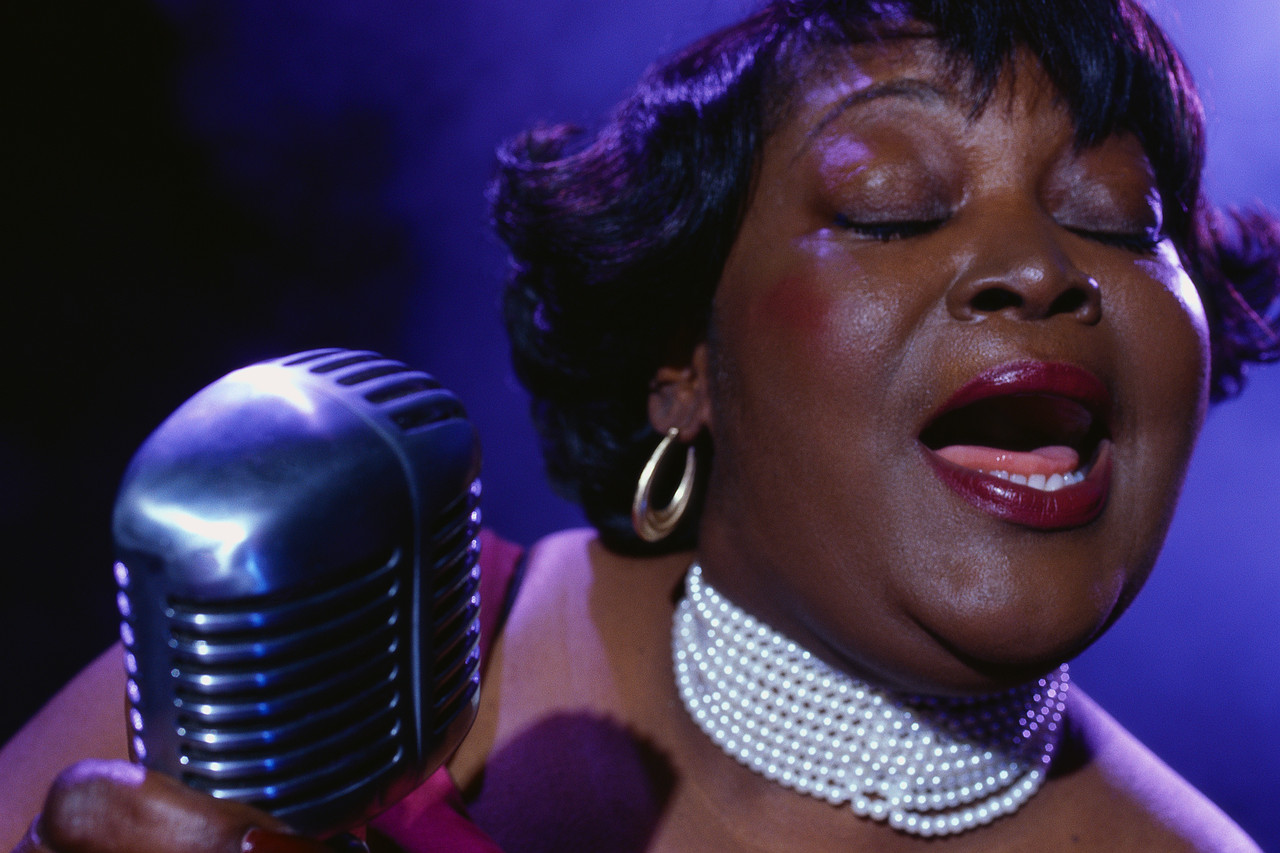
I have spent just about all of my adult years singing in one choir or another.  As an alto, I have been called upon to venture into “soprano” territory from time to time.  This “falsetto” tone is not “full” but has a quality about it that works for a particular part of a given song.  But I can imagine what it would be like to have to sing falsetto all of the time.   My vocal cords would be worn out.   My voice would be strained.  Not a good scenario.  Fortunately, I get to sing within my range most of the time, so “full voice” is the norm.

Recently, I’ve been thinking about how this concept of “voice” applies to other areas of expression, like speaking and writing. In our consumer-driven society, our creativity can be seen as a mere commodity instead of the gift from God that it is. The temptation to compare or compromise our voices is very real.  A connection with our Creator is our only effective strategy against this.

What does it mean to discover and embrace your unique voice in the spoken and written word as well as the lived life?  How can we live in “full voice” and instead of settling for the “falsetto?”  There are no formulas or quick fixes here, but my opening poem is my way of working through these questions.  Whether you sing on a platform or in your living room, I invite you to consider how the imagery in the poem speaks to you. 

Your Call: In what area is God calling you to increased commitment to discerning and developing your unique voice?  What highlights and challenges have you encountered on the journey to “full voice?” 

Legacy

His hands hold steady.
I pedal forward to be
          released to the Wind.

This marks my fourth Father’s Day without my father’s presence.   As I grieved three years ago, I received many thoughtful expressions of sympathy, but one stands out in particular.  A childhood friend sparked a precious memory that has continued to be a point of reference in my journey.

The bicycle is yellow, not particularly fancy but definitely sturdy.  My father is a practical man, but I wonder why he would pick a yellow bicycle for a daughter who is terrified of bees. The sun is out during my riding lesson (probably one of many), so at least my bike matches the day.  I get on to the bicycle.  My father holds on and walks with me as I pedal, reassuring me.  Then we pick up speed and momentum builds and all of a sudden, he is standing with my friends, cheering me on. I don’t know when my father let go. All I know is that I’m riding.

On any given summer evening, I can imagine that many fathers are still teaching their children to ride their bikes without training wheels.   What speaks to me now is the beauty of the transition of that moment.  There was not only a release, but a release to something — the wind that continued to usher me along even as I struggled to find my balance.  Certainly, this experience points to what parents and mentors are called by God to do.  I am inspired by my father’s faithfulness to his assignment and compelled to follow his lead.  In the meantime, the ride continues and when I feel unsteadied, I remind myself that the Everlasting Arms have always picked up where my father left off.

Your Call: Think about someone who has left a legacy which inspires you to move forward in God’s purpose for your life.  What legacy do you want to leave behind?