Lessons from Aretha: Finding & Honoring Your Voice

This past summer, I saw the movie “Respect” and was struck by what Aretha Franklin endured and how she persevered.  She had recorded numerous albums for Columbia Records, but none of them seemed to capture her unique sound.   Then Aretha went to Atlantic Records where she composed more of her music, accompanied herself on piano, and recorded at the off-the-beaten-path Muscle Shoals studio in Alabama. In “Respect”, there was a scene with Aretha being interviewed during a recording; she said that she was still trying to find her voice.  Wondering whether this happened or was dramatized, I searched YouTube and found video clips from the actual recordings. In one of them, Aretha indeed said:

 “I still have to find out who and what I really am.  I don’t know yet. I’m trying to find the answer.”

I was amazed that this was coming from the mouth of the future Queen of Soul.  Aretha already had a powerful singing voice but she was searching for more. It was fascinating to watch this process unfold.  She found the space needed to bring her full self to recording. Yet, she would have to deal with those who profited from her voice at the expense of her personhood.

Over the years, these actions have helped me navigate finding voice on my own journey.

Recognizing uniqueness.  Ironically, when I first became licensed to preach, I felt like I lost my voice as I felt inadequate compared to those around me.  I had to break free of my own rigid sense of what a preacher should sound like. Celebrating myself as a beloved and called daughter of God, a lover of books, music and poetry, and one who is curious, creative, and contemplative empowers me to speak up in my most authentic and powerful voice.

Receiving from others.  I’m grateful for my parents and family who spoke into my life before and after I was born.  I appreciate my pastor and other trailblazing clergy who have helped me hone my voice.  I glean from the legacy of courageous women in Scripture and throughout history.

Remembering that voice is connected to a person.  Voice shows up in preaching, singing, speaking and writing, but it is not a product. Voice is an extension of being and living in communion with God, yourself and others who love you for who you are and encourage you to be your best true self.  

Your Call: Watch the excerpt from National Geographic’s “Genius: Aretha”. What stands out to you about it?  What lessons are you learning about your voice in this season?

Resurrection Living: The Power of the Squad

I met a couple of sister-friends for breakfast a few weeks ago. As we caught up with what was happening in each other’s lives, I noticed that we had similar challenges and had been nudged by Divine Destiny in various ways.  I left the gathering encouraged and yet reminded that my comfort zone, however cozy, can’t be my resting place. This experience was not particularly dramatic but it became more meaningful in light of what has taken place in recent weeks.

I thought about the four congresswoman of color (Representatives Alexandria Ocasio-Cortez, Ilhan Omar, Ayanna Pressley and Rashida Tlaib) who were targeted with racist insults for insisting on being seen and heard.  

The 50th anniversary of the U.S. moon landing made me ponder the legacy of the three African American women (Katherine Johnson, Mary Jackson, and Dorothy Vaughan) featured in the movie Hidden Figures, all of whom paved the way for that to take place in the midst of a segregated workplace.

Consider the courage necessary for these women to persevere. Can you imagine the conversations that they needed to have to keep each other from giving up? This is the power of the squad.   Your squad encourages you when you are tempted to shrink back. Your squad challenges you when you settle for less than your best. Your squad backs you up when you are under fire. Your squad celebrates with you in your victories.

Let’s go back even further and  picture a group of women standing and weeping before a cross on which their beloved Jesus Christ hung and died. 

Near the cross of Jesus stood his mother, his mother’s sister, Mary the wife of Clopas, and Mary Magdalene.  John 19:25

Can you hear them asking themselves or perhaps one another, “What are we going to do now?” They would gather once again to head to the tomb only to find it empty.

The angel said to the women, “Do not be afraid, for I know that you are looking for Jesus, who was crucified.  He is not here; he has risen, just as he said. Come and see the place where he lay. Then go quickly and tell his disciples: ‘He has risen from the dead and is going ahead of you into Galilee. There you will see him.’ Now I have told you.”  So the women hurried away from the tomb, afraid yet filled with joy, and ran to tell his disciples.  Matthew 28:5-8

This squad bore witness to the resurrection and yet it is reported that some of the disciples did not believe them (Luke 24:9-11).  Nevertheless, the women could not sit by the empty tomb stuck in the stigma of being disbelieved. When you are not taken seriously in proclaiming and walking in newness of life, it is good to have a squad.

Now like never before, there needs to be a resurrection of hope. Sometimes hope withers in disappointment with personal situations and unmet expectations. Sometimes hope is buried under disillusionment with society and its institutions. What can breathe life into a hope that has been declared dead?  Sometimes that Resuscitating Wind is channeled through a squad to remind you to be fully alive.

Your Call:  How has God used a squad to speak new life over you in some way? How can you speak new life into others around you?   

Resurrection Living: The Power of Legacy


More than a month has passed since Easter 2019, and Jesus still lives.  I want and need to live out this truth. My desire going forward is to experience resurrection as a state of mind and a way of life.

In the meantime, Mother’s Day has come and gone and it was complicated for all kinds of reasons. Children have grieved the loss of their mothers.  Mothers grieve over loss of children. Others grieve over less than ideal relationships with their mothers or children. As thankful as I am for the woman who birthed and raised me,  I am also accepting (and grieving) the fact that I will not birth a child. And yes, having any role in mothering another is wonderful, but the disappointment is still real.

Is it possible to breathe new life into a dream that has died?

When I think about loved ones who have died, I find some comfort from the legacy they left.  For me, legacy is like the act of weaving the most meaningful threads of someone else’s life into the tapestry of my own life. As I process my own ambivalence around motherhood, I am reflecting on Shiphrah and Puah, Hebrew midwives in the Old Testament book of Exodus and I’m encouraged that God had something special in store for them.

God was pleased with the midwives. The people continued to increase in number—a very strong people. And because the midwives honored God, God gave them families of their own. Exodus 1:20-21 (The Message)

That is not to say that Shiphrah and Puah necessarily had biological children, but they would indeed bring something forth.  This is their legacy to me.

In  Exodus Women, Volume One: Securing the Sacred, Alison Gise Johnson and Vanessa Monroe make this clarion call:

“Midwives have no purpose unless women are ready to give birth — to birth dreams, strategic plans, businesses, careers, research, publications, and ministries. At some point, even midwives themselves are ready to birth. And so are you.”

As a spiritual midwife, I have rejoiced in bearing witness to the birthing of purpose in others. Yet I also want to delight in that Voice saying, “And there is more for you too…”
How about you? What are you being called to bring forth?

Your Call: Where are you bearing witness to new life in this season?  Whose legacy can you reflect on to encourage you?

Advent 3: Dreaming While Woke

When the Lord restored the fortunes of Zion, we were like those who dream.
Then our mouth was filled with laughter,  and our tongue with shouts of joy;
then it was said among the nations, “The Lord has done great things for them.”
The Lord has done great things for us, and we rejoiced.
Restore our fortunes, O Lord, like the watercourses in the Negeb.
May those who sow in tears reap with shouts of joy.
Those who go out weeping, bearing the seed for sowing,
shall come home with shouts of joy, carrying their sheaves.

Psalm 126 reminds me why worship is so important. In these nightmarish times, we can’t afford to stop dreaming of the goodness that is possible. Worship helps get us there by redirecting our focus toward God, not for escapism, but for the joy and power that comes with a stronger connection to God.

As we stay woke to the reality that is life today, hope must be one of our companions if we are to stay well. Worship gives us space to remember who God is and what God has already done so that we dare to envision a world where love, peace and justice reign.

In painting a picture of an empty riverbed in the desert region of the Negev, this psalm lifts up prayers for reversal and restoration, from dryness to drenching, from sowing in tears to reaping with joy.  Can you relate to this shift in your own life?

Worshipping in community gives us an opportunity to rejoice in anticipation of better times as we ask each other, “Can’t you feel a brand new day?!”  The song that poses this question is from the soundtrack of The Wiz.  It is not a traditional worship song but it speaks to our need to celebrate freedom at its fullest because “it’s like a different way of living now…”

Amazing things can happen when worship links up with work by way of the Spirit of God.  Isaiah 61 speaks of One anointed to be a vessel of reversal, bringing good news to the oppressed, binding up the brokenhearted, and proclaiming liberty to the captives.  It speaks of a people who have been planted by God for a ministry of restoration, building up and repairing the ruins around them. Will you accept God’s invitation to participate in the divine restoration to come?

Your Call: Watch the videos above; what calls out to you in them?  If you painted a picture of a “different way of living” for the world to see, what would it look like and what small step can you take to move in that direction?   What are you being anointed to do in God’s process of restoration?

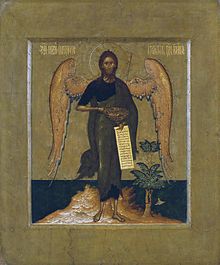
Advent 2: Preparing the Path

A voice cries out: “In the wilderness prepare the way of the Lord,  make straight in the desert a highway for our God.”  Isaiah 40:3 (NRSV)

 A voice says, “Cry out!” And I said, “What shall I cry?”
All people are grass, their constancy is like the flower of the field. The grass withers, the flower fades,   when the breath of the Lord blows upon it; surely the people are grass. The grass withers, the flower fades;  but the word of our God will stand forever. Isaiah 40:6-8 (NRSV)

 I have baptized you with water; but he will baptize you with the Holy Spirit.”  Mark 1:8 (NRSV)

What does it look like to prepare a path for the Lord in this wilderness we find ourselves in at the end of 2017?   Honestly I’m too weary to figure this out and should know better than to try.  If I could interview John the Baptist, I would ask him, “How do we cry out to those who deny their own fragility and mortality?” I can’t hear his answer, but the Gospel writer Mark reports that he told the people that Jesus would baptize them in the Holy Spirit.

In the desert, there is a scorching breeze that can stifle our breath. We can’t cry out to prepare the way of the Lord if we can’t breathe. Our only hope right now is the Breath of God, which makes the first move in preparing a path in our minds and souls so that we hear the word that we need and can act on it with the power we need.   This is a season to breathe more deeply than ever before.

Your Call: What spiritual practice would help you make room for the Breath of God to give you the Word and Power you need to discern and fulfill your assignment in this season? Some options may be to offer a prayer like the video above, to allow for more silence and solitude, or to simply take time to breathe deeply as a reminder that the Spirit of God is present.

Advent 1: Waiting in the Gaze of God

O that you would tear open the heavens and come down. Isaiah 64:1a (NRSV)
Restore us, O God; let your face shine, that we may be saved.  Psalm 80:3 (NRSV)

These are desperate times.

Sexual assault and harassment exposed.

Slave auctions in Libya.

A cruel tax bill that favors the rich.

These are desperate times, so we cry “O Come O Come Emmanuel!”

And we wait for righteousness and justice to prevail.

If we prayed hard enough, would God step out of the sky to confront and correct all injustice with a divine wave of the hand?   We could pray along with the Psalmist who says:

“Restore us, O God, let your face shine, that we may be saved.”

But would we know what we are actually praying?  The loving luminous gaze of God is an amazing thing, but is nothing to be played with.  It guides our steps and infiltrates our souls.  It encourages but it also exposes.  This is the road to restoration, but will we take that journey?

Perhaps there is another plan at work to answer our prayers, like when Jesus came down as the Incarnate God, not by stepping out of the sky but by showing up in the womb of a young woman from Nazareth.

In the midst of unchecked abuse of power and its consequences, Advent asks us:
Who will we be and what will we do on Christ’s behalf?

Your Call: How are you being called to represent Christ during these troubling times as Advent begins?

The Beauty of Late Blooms

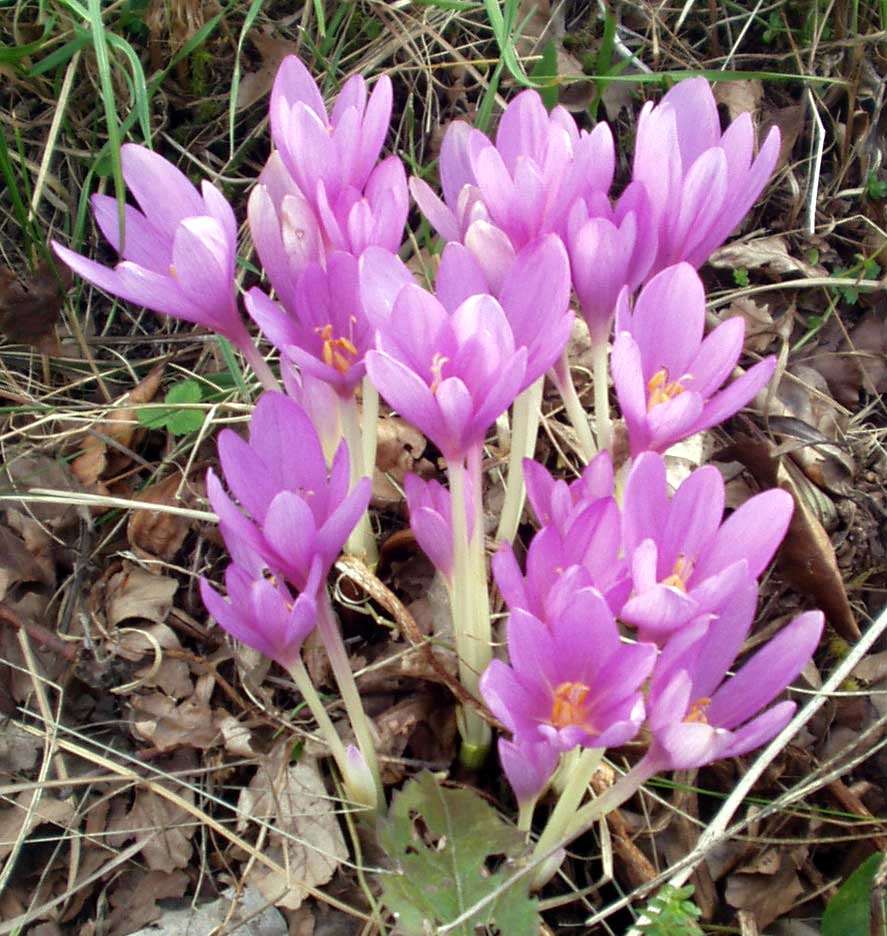
Colchicum_autumnale

I usually associate the fall season with falling leaves. Last autumn, I learned to appreciate the beauty in that. But as I wave good-bye to summer once again, it occurs to me that there are actually flowers that are just getting started. While leaves fall, blossoms emerge from hidden places like the autumn crocus that is pictured here.  It is in those blossoms that I find hope.

I am now officially closer to 50 than 40 and I have wrestled with the realities, reflections and regrets that come with midlife. My 20’s were a blast, but my 30’s, not so much, given my awkward entrance into ministry and the loss of a precious loved one that occurred during that decade. As I crept into my 40’s, I wondered if I had squandered some of my prime ”blooming“ years. When I attended my 20-year college reunion several years ago, I had to miss quite a bit of it because I went to a friend’s wedding on the day when most of the activities took place. Honestly, I was a bit relieved. After all, I had nothing particularly exciting to share.

Imagine how Elizabeth felt when she didn’t have anything particularly exciting to share, especially in a context (Luke 1) where a woman was defined by her ability to have children. As she likely traveled to the temple when her husband Zechariah was assigned to serve as priest, Elizabeth had to journey alongside women who were pregnant or walking with children she wished she could bear. After a while, I suspect that she resigned herself to the fact that her “prime blooming years” were behind her. Little did she know what was to come.

As I consider the testimony of Elizabeth and the autumn crocus, I realize that I am in good company. There is something beautiful and resilient about late bloomers, whether they are plants or people. Though there are areas in my life where I have yet to see blooms, I choose to embrace the opportunities that are blossoming before me at the moment. I choose to resist the temptation to look at my watch and wonder why it has taken so long. I choose to answer the call that Dr. Renita Weems makes to “Elizabeths” in her book Showing Mary: How Women Can Share Prayers, Wisdom, and the Blessings of God:

“Celebrate your blooms because they took so long in coming. Be grateful for that second wind. Relish the learning and wisdom you’ve garnered. This is your season, Elizabeth. Seize it. Give birth to the gift of God within you. You’ve now got talent and the inner strength that comes with age. You’ve now got enthusiasm and the wisdom that comes with experience. You’re ready.”

Your Call: Are you a late bloomer in some area of your life? If so, what would it take for you to celebrate and make the most of that reality? How will you partner with God to cultivate what is blossoming for you right now?

Annunciation

Henry Ossawa Tanner - The Annunciation

Henry Ossawa Tanner – The Annunciation

Stumbling into sacred space,
I overhear
whispers in the heavens,
declaring,
preparing,
scaring
me.

Wrestling in the Presence
and overshadowed,
I gasp
and Spirit blows,
and lungs expand,
and I exhale,
“Yessss…”

© Sharon Fleshman, 2011, 2013

Your Call: In what place is God summoning you and awaiting your Yes?

Breaking Bread: The Power of Conversation and Community

Now that same day two of them were going to a village called Emmaus, about seven miles from Jerusalem. They were talking with each other about everything that had happened. As they talked and discussed these things with each other, Jesus himself came up and walked along with them;but they were kept from recognizing him. He asked them, “What are you discussing together as you walk along?”  They stood still, their faces downcast.
Luke 24:13-17 (NIV)

It has been months since Easter Sunday, but I still find myself captivated by the disciples’ trip to Emmaus. I can imagine their state of mind. Perplexed. Expectations dashed. “We had hoped that [Jesus] was the one to redeem Israel,” said the disciples to the Stranger who had joined them on the journey.

Last weekend, I attended a women’s conference that revived me in a way that I had not experienced in a while.  It was as if the wind of the Spirit blew into my soul afresh, and I rejoice in a renewed sense of purpose and potential.  Yet a week later, I find myself overwhelmed as I discern what my next steps should be. After these mountaintop experiences, my challenge is always to maintain momentum when I get back to sea level. In the meantime, I grieve recent tragedies such as the shooting in Aurora, CO. I recognize that in the shadow of the resurrection, death remains. The death of loved ones. The death of dreams. The death of relationships.

“We had hoped that…”

I can relate.  Don’t we all have those thoughts, those if-onlys, haunting us from time to time? I had hoped that my father would live to see certain milestones in my life.  Parents of the victims in Aurora had hoped to see their children thrive.

As they approached the village to which they were going, Jesus continued on as if he were going farther. But they urged him strongly, “Stay with us, for it is nearly evening; the day is almost over.” So he went in to stay with them. When he was at the table with them, he took bread, gave thanks, broke it and began to give it to them. Then their eyes were opened and they recognized him, and he disappeared from their sight. They asked each other, “Were not our hearts burning within us while he talked with us on the road and opened the Scriptures to us?”   Luke 24:28-32 (NIV)

There was something about this Stranger who entered into conversation and community with the disciples.  He inquired. He listened. He brought clarity. He challenged. He blessed. He broke bread.  And all of a sudden, the disciples knew that the “rumor” was true.  Jesus was alive and sitting right there in front of them!

Lately, I’ve asked myself, “when was the last time my heart burned within me, in a good way, based on a conversation?”  By conversation, I do not mean hearing from the Lord through sermons or personal prayer times, though these are vital practices for me.  What I mean is talking with others. I realize that conversations can get a bit messy. After all, Jesus broke the bread; he didn’t slice it.  The good news is that the Presence of Christ can show up in the midst, messiness and all.  Plus, there’s a heartiness and substance to bread that is broken compared to the neatly sliced bread that I often buy at the supermarket.

I’m starting to ask myself a lot more questions to help me envision what “breaking bread” really means.  Please join me.

What if we were more intentional about reminding each other that Jesus is alive and that we can live out that truth between Sundays, conferences, retreats and revivals?

What if we spoke life into desolate places in each other and in the world around us? 

What if we agreed with God that death, while present, does not have the final say? 

What if we not only grieved for families of victims in Aurora, but also confronted the culture of violence in the United States?  

What if we invited the “voiceless” into the conversation? 

How is God calling us to represent the resurrection of Christ in the world?

Your Call:  Read Luke 24:1-35; what stands out to you about the journey to Emmaus?  What is the role of conversation and community in your life? 

If you love somebody, set them free

It’s one thing to be captivated by things.  Cars. Gadgets. Shoes. Diamonds. But a more insidious temptation is to view a person as a means toward an end.  An object. A commodity.  A possession.  In our fallen world, this tendency can sneak up on any of us if we’re not intentional about seeing people as made in God’s image. In some cases, this tendency has gained momentum and evolved into a system of oppression.

January 11 has been declared Human Trafficking Awareness Day.  According to the Polaris Project, approximately 27 million people are modern day slaves, whether in forced labor or the sex trade, generating annual profits of about $32 billion.  With such overwhelming numbers, it’s easy to downplay our potential for contributing to positive change.  Nevertheless, in dedication to our Redeemer, we must act.  Here are some places to start: 

  • Learn more about the issue and how it is already being addressed.  The Department of State has published a comprehensive reportWorld Vision, International Justice Mission, and American Baptist Women’s Ministries are three groups offering advocacy and assistance, but I’m sure that there are many more.
  • Advocate for the continuance of necessary legislation.
  • Consider the products that you purchase and whether they are produced ethically. 
  • Donate to the work of organizations who are addressing this injustice.
  • Establish a time for periodic prayer and intercession. And pray. 

 Your Call:  Take a look at one of the websites linked above and based on what you learn, say a prayer of intercession for victims of human trafficking. Take another look at the list above.  Pray about what action(s) you will take and make a commitment to follow through.