Epiphany: God-Sightings and The Work of Christmas

After singing about “a partridge in a pear tree” for so many years, I’ve now embraced the notion that there really are twelve days of Christmas and I’ve been more mindful of the significance of Epiphany this time around.  As it was for the shepherds (Luke 2:8-20) and the Magi (Matthew 2:1-12), having a revelation of God in Jesus Christ continues to be a gift.  

Today was the last day of a week-long course that I attended and one of my classmates opened the session with a time of reflection.  She invited us to mention any “God-sightings” which pointed to our recent awareness of the presence of God in our lives.  After we testified of the gift of God in our lives, our classmate then reminded us that the gifting must continue.  She presented the following poem (written by Howard Thurman) as a call to extend the grace that we have received:

The Work of Christmas
By Howard Thurman

When the song of the angels is stilled,
When the star in the sky is gone,
When the kings and princes are home,
When the shepherds are back with their flocks,
The work of Christmas begins:
           To find the lost,
           To heal the broken,
           To feed the hungry,
           To release the prisoners,
           To rebuild the nations,
           To bring peace among the people,
           To make music in the heart.

Your Call:  Think about how Epiphany applies to your life. What “God-sightings” do you recall from this week?   Take some time to meditate upon Thurman’s poem.  How do you think God is calling you to continue the “work of Christmas”?

A Thrill of Hope, The Weary World Rejoices

In recent years, I haven’t been particularly drawn to Christmas music the way I used to be. I’ll go further and confess that, this year, Advent served as more of a countdown to vacation time than anything else.  But while I was in church for Christmas service, I listened to a song that I have heard a million times and something changed.  All it took was one line from O Holy Night:

A thrill of hope, the weary world rejoices…

A gracious God met me in my weariness with Hope in hand, just as on that “Night Divine.”  In response, I was drawn to the story of the shepherds (Luke 2:8-20).  In Jesus through Middle Eastern Eyes: Cultural Studies in the Gospels, Kenneth E. Bailey points out that “the first people to hear the message of the birth of Jesus were a group of shepherds who were close to the bottom of the social scale in their society.” As I pondered this, I found myself wondering what it would be like to enter their world.

Hello. My name is Mary.  Not that Mary.  I am…another Mary. My father is a shepherd. He works very hard, so hard that I can hear the weariness in his sighs when he comes home every night. It’s amazing what can happen in just 24 hours.  Last night, my father came home. As usual, he had worked hard, but there was something different…

All of a sudden, he picks up my sister and whirls her around and around and around until their laughter fills the house from top to bottom.  Then he says,

“Everybody come here! Come here right now! I have something to tell you!” 

As we gather around him, I see a twinkle in his eye that he hasn’t had in a long time.  He pauses. Then he says:

“You won’t believe what happened to us today while we were tending our flocks. Out of nowhere, an angel appeared and said:

 ‘Do not be afraid. I bring you good news that will cause great joy for all the people. Today in the town of David a Savior has been born to you; he is the Messiah, the Lord. This will be a sign to you: You will find a baby wrapped in cloths and lying in a manger.’

 And so we practically ran to Bethlehem and we found Him, just as the angel said. We saw Him. The Messiah.  We.   saw.   Him.”

My father’s voice begins to waver and he just looks up, lifts his hands and shakes his head. And the tears come.  I run to the corner of the room. And I sit. And I look up.  And I say:

Maybe I don’t have to be a son of a rabbi for You to see me. Maybe You are listening to me after all.  Me. The daughter of a shepherd.   If that Mary was from Nazareth, maybe You have a purpose for me too.   

Hear my prayer, O Lord.

Hear my prayer, O Lord.

Hear my prayer, O Lord.  

Amen.

Your Call: Read Luke 2:8-20.  Read it again. Sit with it. Imagine how you would feel if you were a shepherd or a part of his family and had been given hope for your weariness. Perhaps you are weary. If so, receive the hope of Christ afresh.  Perhaps you know others who are weary.  Offer them this hope that you are privileged to possess.


The Shutdown

Image

But the angel said to him: “Do not be afraid, Zechariah; your prayer has been heard. Your wife Elizabeth will bear you a son, and you are to give him the name John. Zechariah asked the angel, “How can I be sure of this? I am an old man and my wife is well along in years.” The angel answered, “I am Gabriel. I stand in the presence of God, and I have been sent to speak to you and to tell you this good news. And now you will be silent and not able to speak until the day this happens, because you did not believe my words, which will come true at their proper time.”  Luke 1:13,18-20

After this his wife Elizabeth became pregnant and for five months remained in seclusion. “The Lord has done this for me,” she said. “In these days he has shown his favor and taken away my disgrace among the people.” Luke 1:24-25

This year, Advent has found me a bit drained, mostly because of my fall schedule. But I must also confess that there’s been a restlessness within as I approach the end of another year in waiting mode. Perhaps this is why I find myself identifying with Zechariah and Elizabeth these days.  A few months ago, I asked my students to come up with questions to ask this couple as we studied the Gospel of Luke together.  One particular inquiry to Zechariah really struck me: “Did your relationship with God grow while you were mute?”  This question challenged my assumption that Zechariah’s inability to speak for a season was merely punishment for his doubt.  Suppose his mute state was a means of preparation?  In the meantime, Elizabeth did eventually conceive and went into seclusion for five months.  Whatever was going through her mind, surely the time without a multitude of voices in her ear was beneficial.  I can’t help but think that God set her apart and had her come aside for a reason.

Silence and solitude can pave the way for us to be more intentional about listening to and receiving from God. Yesterday, I attended a gathering for women in ministry and one of the hosts led us in a period of meditation on selected Scripture verses revolving around call (Jeremiah 1:4-10; Isaiah 42:5-9, 43:1-4). While I have read those passages before, there was something about having them read to me and over me.  Slowly. As if being served a meal to be savored. There were moments of silence in the room for reflection, but I also got quieter within as the Word of God refreshed my soul and reminded me of God’s grace in my life.

As I think back on the class with the “interview” of Zechariah and Elizabeth, I recall that it ended with a student praying “Lord, thank You for the Shutdown!”  I recall saying to myself, “This prayer is for real…” Elizabeth and Zechariah were about to bring forth a prophet, and a wilderness prophet at that.  They had to be strengthened and prepared for raising John the Baptist and releasing him to God’s call on his life.  By the power of the Holy Spirit, Elizabeth and Zechariah showed up.

When Elizabeth heard Mary’s greeting, the baby leaped in her womb, and Elizabeth was filled with the Holy Spirit. In a loud voice she exclaimed: “Blessed are you among women, and blessed is the child you will bear! But why am I so favored, that the mother of my Lord should come to me? As soon as the sound of your greeting reached my ears, the baby in my womb leaped for joy. Blessed is she who has believed that what the Lord has said to her will be accomplished!”  Luke 1:41-45

His father Zechariah was filled with the Holy Spirit and prophesied: “… And you, my child, will be called a prophet of the Most High; for you will go on before the Lord to prepare the way for him, to give his people the knowledge of salvation through the forgiveness of their sins, because of the tender mercy of our God, by which the rising sun will come to us from heaven to shine on those living in darkness and in the shadow of death, to guide our feet into the path of peace.” And the child grew and became strong in spirit; and he lived in the desert until he appeared publicly to Israel.  Luke 1:67,76-80

If we would birth and be faithful to the call that God has placed in us, we must submit to the shutdown, a space where we can hear God’s whispers in the midnight hour, the dry season,  or the valley.  To be clear, the shutdown is not for the purpose of isolation or self-protection. In fact, its goal is just the opposite.  The shutdown prepares us for the Show Up in all its fullness.

Your Call:  Can you recall a time when God was calling you to a season of “shutdown” in your life? What did you hear and receive from God during the process?  How has it helped you to “show up” more fully?

Legacy, Part 2

CC Image courtesy of Lane 4 Imaging on Flickr

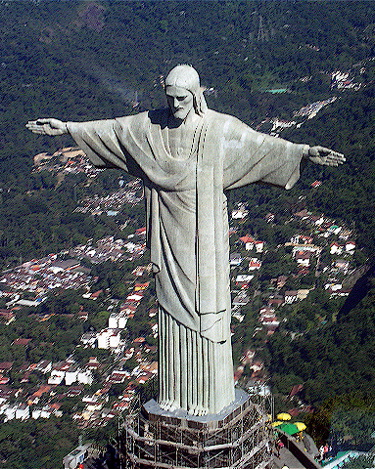
As I look at pictures from the recent MLK memorial dedication, the 30 foot tall statue of Rev. Dr. Martin Luther King, Jr. seems larger than life.  So it is with the notion of legacy, especially when you consider all that Dr. King accomplished before the age of 40.

Reflecting upon the lives of those who have made a notably “visible” impact in the world can be inspiring and overwhelming at the same time.  Now that I’m forty-something, my perspective on legacy is being tested and is surely evolving in this season of my life. Anyone in any kind of leadership role knows the temptation to measure legacy by visibility.

Truth be told, Dr. King’s legacy was strengthened by many who were relatively less visible:  Rosa Parks, Rev. Fred Shuttlesworth, Fannie Lou Hamer, and Ella Baker, to name a few. And even less visible:  21 teachers (my mother included) in Elloree, SC, who resigned rather than renounce their NAACP memberships.

Perhaps legacy begins when we act on opportunities to plant seeds of eternity along the way, wherever our journeys take us.  A few months ago, I posted a blog in tribute to my father that spoke of his legacy in a metaphorical way.  To be more concrete, I can say that my father modeled a willingness to question, intellectual curiosity, awareness of what’s going on in the world, not being caught up in popularity or pretension, and love of family and friends.  Not that I’ve mastered these values by any means, but they serve as a compass for me nevertheless.

CC Image courtesy of VoiceBrazil on Flickr

As I’ve studied and taught on Luke’s account of the Gospel for the past few weeks, I am struck by Jesus’ willingness to become human in such an unassuming way.  He could have simply showed up grown and regal, but chose another path, immersing Himself into the vulnerability of the human experience. Jesus did not shrink back from moving in visible ways or acknowledging His identity, but He did so on His own terms, leaving a legacy of love, redemption and empowerment for us to follow.  While this legacy is also larger than life, it also transcends our limitations and shows us where to start: Love the Lord your God with all your heart and with all your soul and with all your mind.  Love your neighbor as yourself. Act justly. Love mercy. Walk humbly with your God.

Your Call: If someone were commissioned to sculpt an image that represented you, what would you want it to look like?  What do you want to be remembered for?  How can you be more intentional about leaving a meaningful legacy?

Full Voice

Falsetto
sounds real pretty
but only momentarily
so
Work your range.
Sip Living Water.
Breathe deep.
Let Air do what Air does best
in Full Voice.

I have spent just about all of my adult years singing in one choir or another.  As an alto, I have been called upon to venture into “soprano” territory from time to time.  This “falsetto” tone is not “full” but has a quality about it that works for a particular part of a given song.  But I can imagine what it would be like to have to sing falsetto all of the time.   My vocal cords would be worn out.   My voice would be strained.  Not a good scenario.  Fortunately, I get to sing within my range most of the time, so “full voice” is the norm.

Recently, I’ve been thinking about how this concept of “voice” applies to other areas of expression, like speaking and writing. In our consumer-driven society, our creativity can be seen as a mere commodity instead of the gift from God that it is. The temptation to compare or compromise our voices is very real.  A connection with our Creator is our only effective strategy against this.

What does it mean to discover and embrace your unique voice in the spoken and written word as well as the lived life?  How can we live in “full voice” and instead of settling for the “falsetto?”  There are no formulas or quick fixes here, but my opening poem is my way of working through these questions.  Whether you sing on a platform or in your living room, I invite you to consider how the imagery in the poem speaks to you. 

Your Call: In what area is God calling you to increased commitment to discerning and developing your unique voice?  What highlights and challenges have you encountered on the journey to “full voice?” 

The Dilemma of Expectation

Then Peter began to say to Him, “See, we have left all and followed You.”  So Jesus answered and said, “Assuredly, I say to you, there is no one who has left house or brothers or sisters or father or mother or wife or children or lands, for My sake and the gospel’s, who shall not receive a hundredfold now in this time—houses and brothers and sisters and mothers and children and lands, with persecutions—and in the age to come, eternal life. But many who are first will be last, and the last first.”  Mark 10:28,29  (NKJV)

Then Jesus said to them, “Children, have you any food?”  They answered Him, “No.” And He said to them, “Cast the net on the right side of the boat, and you will find some.” So they cast, and now they were not able to draw it in because of the multitude of fish. Therefore that disciple whom Jesus loved said to Peter, “It is the Lord!”  John 21:5-7a (NKJV)

I have always appreciated Peter’s bold comment to Jesus.   In fact, I suspect that the other disciples were thinking the same thing and dared not speak of it.  But there’s no tiptoeing around the issue with Peter. He points to the disciples’ sacrifice and wants to know what to expect in return. Jesus’ response is promising, scary and mysterious all at the same time. Fast forward to a disillusioned Peter after his Rabbi’s crucifixion, headed back to what he knows best – fishing. 

This morning, my pastor preached on the disciples’ fishing trip in John 21, touching on Peter’s conversation with Jesus in Mark 10.  Anyone who’s familiar with my approach to Bible study and meditation knows that I advocate prayerful wrestling with the text as it relates to both interpretation and application.  Tasting the Word is just the beginning; digesting the Word is a longer, deeper process.  This morning’s message really hit home for me. I have echoed Peter’s sentiments on more than one occasion.  While I can’t say that I’ve sacrificed nearly as much as the disciples, or those in the Persecuted Church (then and now), what I have given up (proximity to most of my family) is significant to me.  And while I’d like to consider myself somewhat socially conscious, I confess that I’ve done my share of buying into the “American Dream.” When I was 21 (loving Jesus and all), you couldn’t have told me that 20+ years later, I would be unmarried, without children, and lacking a picket fence. 

Waking up and moving forward has been a journey. I’m at a crossroads, wondering what “family” is supposed to look like for me and pondering the notion of expectation quite a bit.  What does it really mean to walk in expectancy?  How do we claim the promises of God? Where do we cross the line into a sense of entitlement?  What happens in the midst of unmet expectations and disappointment?   How does this affect our prayers?  Is it presumptuous to be specific in bringing our hopes and dreams to God? Shall we stick with general, safe prayers?  What part do prayers of relinquishment play?  How do we maintain gratitude for what God has already done while still acknowledging unfulfilled longings?

However Peter wrestled with this, Jesus showed up, reversed the fishing failure and eventually kept His promise. Peter was empowered to be a “fisher of people”, even while facing persecution.  As I move into the next chapter of my life, please pray with and for me. The plot continues, it’s a cliffhanger, and the Author ain’t telling me much in the way of details.  In the meantime, what I’m hearing right now is — “It is the Lord!”  So be it.

Your Call: How does your prayer life look when you are disappointed or disillusioned? How can you fully embrace Jesus’ promise of an abundant life without idolizing or distorting that promise?

The Gifts, The Gifted, and The Giver

flower purple petal gift decoration color colorful pink christmas paper package advent christmas decoration gifts art joy birthday loop made packed give surprise gift packaging mother's day children's birthday packet loop origami paper wedding favors

So Jacob’s gifts went on ahead of him, but he himself spent the night in the camp.
Genesis 32:21 (NIV)

When I was studying and teaching on the life of Jacob and his family last fall, I looked forward to the discussion around Jacob’s wrestling match (Genesis 32:24-32), one of my favorite narratives in the Old Testament.  The intensity, vulnerability and mystery of that encounter have always intrigued me, especially since Jacob emerged from it with a greater sense of identity.   Of course, broken relationships make up the context of this scene. Jacob must eventually face his brother Esau, who he had betrayed years earlier.  In response, Jacob decides to send his possessions in an attempt to appease him.  I’ve looked at this text on a number of occasions, but this time, I was particularly struck by the notion that “Jacob’s gifts went on ahead on him, but he himself spent the night in the camp”  It’s as if the gifts served as some kind of shield for Jacob, a means of protection from the wrath to come.  But God then turns Jacob’s scheme on its head. As a result of sending his gifts, servants and family members ahead, Jacob is left alone to face not his brother, but himself.  And so, the wrestler appears and the wrestling begins.  The next day, Esau greets Jacob not with a chokehold, but a hug.  Perhaps he’s had his own wrestling match. In the end, grace prevails.

As fascinated as I was with this study when I shared it with my class, I had this sinking feeling that I would have to enter into this text like I never had before.  As much I appreciate Jacob’s journey, I wasn’t trying to hang out with him like that.  It’s one thing to be a spectator in a wrestling match, it’s quite another to find yourself thrust into the ring.  But in an age where celebrity status, constant busyness, and social isolation are such temptations for ministry leaders, I have to yield to the necessary wrestling if I am to live and serve with integrity and wholeness.  So in this phase of my life, I’m confronting my tendency to define my value by what I do, what people think of what I do, and how “productive” I am.   This is not to say that I don’t value good stewardship of my gifts, but my identity needs to be rooted in the Giver so that my “gifts” are actually gifts, God-breathed and grace-filled.   What’s more, I don’t want my gifts to be a shield that blocks me from experiencing life-giving community.  In her book Stories from Inner Space: Confessions of a Preacher Woman and Other Tales, Rev. Dr. Claudette Copeland wisely observes that we are often “more comfortable with our assignments than our relationships.”

So what does this mean for me going forward?  Both of the hats I wear (minister and career advisor) involve speaking and “wordsmithing.”  So quite often, I’m thinking and praying about what to say and how to say it.  But what would it look like to have Sabbath spaces, in the presence of God and community, where I can just be?   With nothing particularly profound, clever, or witty to say.  Wrestling and resting. Giving and receiving.  Letting grace prevail.

Your Call: Is there a situation in your life that has resembled Jacob’s wrestling match?  As you make the most of your God-given gifts, how do you maintain a commitment to integrity and character?  Do you have a community in which you are embraced for who you are and not merely defined by your giftedness?

An Independence Day Prayer

Almighty and Loving God,

We come to You,
Humbled that we can.
Thankful that in grace and power,
You created us in Your image.
Grateful that Your Son came, wrapped in flesh,
sacrificing himself to secure our freedom.

We confess that we have not always lived the liberty that You have provided.
Instead we choose to cling to the comforts of the familiar
or to chase after the spectacular.

Help us to confront the internal bondage
that hinders us from following You wholeheartedly.
May Your love replace our fear.
May Your grace replace our pride.
May Your call replace our complacency.

Let us not avert our eyes from the oppression around us,
whether in the form of human trafficking, discrimination or violence. 
May we sit with You and grieve this injustice,
all the while being renewed by Your Spirit once again.
May we sit still long enough to hear and accept Your assignment,
all the while being empowered to transform the wilderness that we face.
May we support one another on the journey,
all the while demonstrating the power of authentic community.

May more chains fall off in our midst because we’ve been with You.

In the precious name of our Lord, Savior and Liberator, Jesus Christ, we pray.

Amen.

Your Call: In what areas of your life are you operating with more freedom?  In what areas do you need to flow with more freedom?  What areas of spiritual and/or systemic oppression concern you the most?  How do you sense that God might use you as an instrument of liberty?

Legacy

His hands hold steady.
I pedal forward to be
          released to the Wind.

This marks my fourth Father’s Day without my father’s presence.   As I grieved three years ago, I received many thoughtful expressions of sympathy, but one stands out in particular.  A childhood friend sparked a precious memory that has continued to be a point of reference in my journey.

The bicycle is yellow, not particularly fancy but definitely sturdy.  My father is a practical man, but I wonder why he would pick a yellow bicycle for a daughter who is terrified of bees. The sun is out during my riding lesson (probably one of many), so at least my bike matches the day.  I get on to the bicycle.  My father holds on and walks with me as I pedal, reassuring me.  Then we pick up speed and momentum builds and all of a sudden, he is standing with my friends, cheering me on. I don’t know when my father let go. All I know is that I’m riding.

On any given summer evening, I can imagine that many fathers are still teaching their children to ride their bikes without training wheels.   What speaks to me now is the beauty of the transition of that moment.  There was not only a release, but a release to something — the wind that continued to usher me along even as I struggled to find my balance.  Certainly, this experience points to what parents and mentors are called by God to do.  I am inspired by my father’s faithfulness to his assignment and compelled to follow his lead.  In the meantime, the ride continues and when I feel unsteadied, I remind myself that the Everlasting Arms have always picked up where my father left off.

Your Call: Think about someone who has left a legacy which inspires you to move forward in God’s purpose for your life.  What legacy do you want to leave behind?

From Lent to Pentecost: The “Absent” Presence of God

Under Evergreen's Eye

As Pentecost Sunday winds up, my mind goes back to a trip I took about two months ago during Lent.  I knew I needed some time away to process things going on (or not going on) in my life.   I can’t even remember how I stumbled upon the information about the retreat. All I knew is that I needed to go.  So I went, enjoying the rustic scenery on the way.  When I arrived, the sky was overcast.  It was springtime, but neither my surroundings nor my mood reflected this.  Almost a year after my ordination, life seemed anti-climactic.  Perplexed,  I wondered, “Now what?”

So here I was at this gathering.  There couldn’t have been more than 10 people present.   To reinforce our discussion, the facilitator decided to play a clip from the movie Ray, which offers a glimpse of the life of the late Ray Charles.  In the scene, a young Ray, who had lost his sight, runs into the house and trips over something on the floor.  Disoriented and scared, he cries out to his mother for help.    There is no response. Ray’s cries grow more desperate. The mother is in the room. She is standing in a silence that would seem stoic, if the camera had not come in closer. Compassion fills her face and her eyes brim with tears, yet she knows that her son has to apply what she has taught him.  So she stands and she waits. Ray begins to grope around to get his bearings. Then, he gets still. He hears a cricket and runs toward it, fears fading.   And yes, he hears his mother breathe.  She had been there the whole time.  “Why are you crying, Mama?” he asks. Her answer — “Because I’m happy.”

As a fan of Ray Charles’ music, I had already seen the movie.  I recall being very moved by the scene I just described, but this second viewing was different.  This time, I wasn’t just watching Ray.  I was Ray.  Along with his cry, I heard the voices of the Psalmists weeping as they sought the whereabouts of God.  And I heard me.  In the face of Ray’s mother, I saw the face of God, full of love and waiting for me to get still, listen, and apply what I have been taught. God was there the whole time, breathing and rejoicing.  In that quiet moment, I had a profound awareness of God’s Presence that I had not experienced in a while and tears of release came.  Pentecost had arrived a bit early and I’m just realizing it now as I write this post. I’m grateful.

Your Call: How have you navigated seasons in your journey in which God has felt distant to you? How are you heeding the call to be still and pay attention to God’s presence in your day-to-day life?